Essential Knots Every Mountaineer Should Master
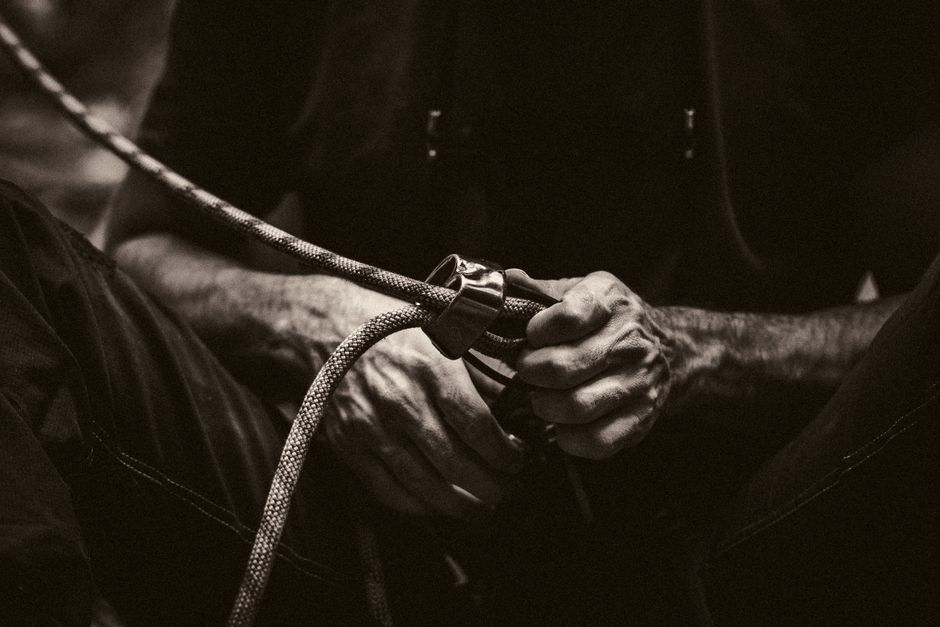
Mountaineering involves navigating variable terrain where rope systems play a central role in safety and efficiency. Among the many knots used in climbing, a few stand out due to their reliability and versatility. The figure-eight knot, the clove hitch, and the prusik knot are three such knots that mountaineers frequently rely on for tying into a rope, building anchors, and performing rescues. Understanding the structure and proper application of each knot is a fundamental part of preparing for climbs in alpine environments.
Each of these knots serves a distinct function within a climbing system. The figure-eight knot provides a secure point for attaching a climber to the rope, while the clove hitch allows for adjustable anchoring with minimal slack. The prusik knot, in contrast, is a friction hitch that can grip a rope under load, making it useful for ascending or for creating a backup in a rescue scenario. Together, these knots form a core set of techniques that can be adapted to many situations encountered on a mountain.
Developing proficiency with these knots requires deliberate practice. Before setting out on a climb, spending time rehearsing the tying sequence and testing each knot under tension can help a mountaineer understand its behavior and limitations. This article examines the characteristics of each knot, typical applications, and considerations for integrating them into larger rope systems.
The Figure-Eight Knot and Its Variants
The figure-eight knot is one of the most common knots in mountaineering because of its balance between security and ease of inspection. The basic figure-eight is formed by creating a loop with the rope, then passing the working end around the standing part and threading it back through the loop. This creates a symmetrical knot that resists slipping even under heavy loads. For climbing, the figure-eight follow-through is the standard method for tying into a harness: the knot is tied loosely, the working end is passed through the harness tie-in points, and then the knot is dressed and tightened.
Another variant, the figure-eight on a bight, produces a fixed loop in the middle of a rope. This loop can be used for clipping into an anchor or for creating a connection point without needing access to the rope ends. Both variants are preferred for their visual clarity—a properly tied figure-eight has a distinct shape that can be checked at a glance. When tying, it is important to leave enough tail length, typically at least six inches, to prevent the knot from untying under load. The figure-eight is also relatively easy to untie after being weighted, especially if the knot is not overtightened by extreme forces.
In mountaineering contexts, the figure-eight is often used at the end of a rope to attach a climber, but it can also serve as a stopper knot or as part of a larger system for connecting multiple ropes. Its reliability makes it a standard choice for many rope-accessible situations, though it is not typically used for anchoring to natural features due to the difficulty of adjusting its length once tied.
The Clove Hitch for Anchoring
The clove hitch is a versatile knot that adjusts easily and holds tension well when under load. It consists of two loops that are laid over each other and then placed around an object, such as a carabiner, a tree, or a rock feature. The knot can be tied directly around the object or pre-formed and then slipped over the anchor point. One of the key advantages of the clove hitch is that it can be adjusted after being tied by sliding it along the standing part of the rope, which is useful when setting up equalized anchor systems.
While the clove hitch is secure when under continuous tension, it can loosen if the load is removed or if the rope is repeatedly jiggled. In climbing anchors, this is often mitigated by tying a backup knot or by ensuring that the anchor remains weighted. The clove hitch is frequently used in combination with other knots, such as the figure-eight on a bight, to create multi-point anchor systems. When used with a carabiner, the clove hitch must be oriented so that the gate of the carabiner is not subjected to cross-loading, a detail that affects the stability of the connection.
Mountaineers also use the clove hitch for attaching a rope to a belay device or to a fixed anchor when setting up a rappel. Its adjustability makes it a practical choice for situations where the anchor distance needs to be fine-tuned. However, because it is not a permanent knot, regular inspection and periodic retying are recommended to maintain security over extended periods. The clove hitch is a knot that rewards practice in both tying and assessing its condition under different load scenarios.
The Prusik Knot for Rescue and Ascending
The prusik knot is a friction hitch that grips a rope when weight is applied and slides easily when unweighted. It is typically tied using a piece of accessory cord wrapped around the main rope. The standard prusik involves passing the cord loop around the rope two or three times, then threading one end of the loop through the other to create a hitch. The number of wraps influences the friction: more wraps increase grip but can also make the knot harder to move. In many climbing systems, two to three wraps are used for a balance of security and mobility.
This knot is especially useful in rescue scenarios where a mountaineer needs to ascend a fixed rope or to create a mechanical advantage system for hauling. By attaching a prusik knot to a rope under tension, a climber can use it as a foot loop or as a backup device to prevent a fall. The prusik knot is also applied in self-rescue techniques, such as transitioning from rappelling to ascending when a rope becomes stuck or when assistance is needed. Because it relies on friction rather than a mechanical locking mechanism, the prusik knot must be tied with compatible rope diameters—typically a thinner cord on a thicker main rope—to function reliably.
In mountaineering practice, the prusik knot is often combined with other knots, such as the figure-eight, to create complex rope systems. The knot requires careful dressing and testing to ensure that all wraps are seated correctly and that the hitch will not slip under load. Regular inspection of the accessory cord is also important, as wear can reduce friction and compromise performance. The prusik knot is a tool that expands a mountaineer’s ability to manage rope systems in dynamic environments.
Integrating Knots into Climbing Systems
In a typical mountaineering setup, these three knots are rarely used in isolation. They are combined to form complete systems for anchoring, belaying, and rescue. For example, an anchor built with a clove hitch on a carabiner at a master point may include a figure-eight knot on a bight for clipping into a separate protection point. A prusik knot can be attached to the same rope to provide a backup for a rappel or to assist in a crevasse rescue scenario. Understanding how these knots interact and how load is distributed among them is an ongoing part of a mountaineer’s education.
The choice of knot for a given task depends on many variables, including the type of rope, the anchor material, the expected loads, and environmental conditions such as ice or moisture. Knotted rope systems can be affected by factors like rope diameter, cord age, and the angle at which force is applied. While the figure-eight, clove hitch, and prusik knot have proven reliable across a wide range of conditions, their performance is always context-dependent. Mountaineers are encouraged to evaluate each knot within the specific parameters of their climb and to remain mindful of the limitations inherent in any rope-based system.
When integrating knots, it is important to consider redundancy. Many climbing systems incorporate backup knots or separate attachment points so that failure of one component does not lead to a complete loss of security. For instance, a clove hitch can be backed up with a stopper knot on the tail, and a prusik used for ascending is often paired with a separate safety lanyard. These habits are part of a broader approach that treats knots as elements within a system rather than standalone solutions.
Practicing and Verifying Knot Security
Building skill with any knot requires repetition and attention to detail. Mountaineers often practice tying the figure-eight, clove hitch, and prusik knot before their climbing season begins, and they continue to refine their technique throughout the year. Practice sessions can include tying the knots with gloves on, in low light conditions, or using different types of rope to simulate real-world challenges. The goal is to achieve a level of fluency where each knot can be tied correctly without conscious effort.
Verification of knot security is a shared responsibility within a climbing team. Before weighting any system, a visual inspection of each knot is performed. Common checks include confirming that the figure-eight is properly dressed with no crossed strands, that the clove hitch is seated fully against the carabiner, and that the prusik wraps are tight and evenly spaced. Many climbing teams also use a tug test to confirm that the knot does not slip under light load. These verification steps are simple but effective in catching potential issues before they become critical.
Ultimately, the mastery of essential knots is a continuous process. As new gear and techniques emerge, the role of traditional knots may evolve, but their fundamental principles remain relevant. By investing time in practice and adopting a mindset of careful inspection, mountaineers can build a solid foundation in ropework that supports their broader objectives on the mountain.